![Banner Dramaturgias de la existencia [sobre-vivir]](https://museodeantioquia.co/wp-content/uploads/2026/05/piezas-digitales-Banner-desktop.png)
Esta “puesta en escena”, es un reconocimiento a los cuerpos (todos) como entidades abstractas y complejas, como esas materialidades carnosas que nos pertenecen pero que en ocasiones – por circunstancias violentas o discursos imperativos – nos son expropiadas. Somos un cuerpo que cobra sentido en relación con los otros cuerpos que nos observan, nos significan, nos excluyen, nos enaltecen, nos intimidan, nos asesinan, nos desean, nos cuidan (…) Existimos porque somos nombrados por lo que es exterior a nosotros mismos, ¿y qué sucede cuando nadie nos nombra, cuando ninguna categoría puede nombrarnos, cuando no hay espacio para un cuerpo?. Esta exposición opera como la teatralización de un “pensamiento sobre el acto de vivir” y la inagotable búsqueda de sentido que encarna ese acto. Nos muestra los feroces (indomesticados) o introvertidos (girados hacía adentro) movimientos de quienes aún en el ardor de la agonía, son invencibles. A su vez nos revela la potencia destructora de los cuerpos dominantes que actúan como bestias políticas.
“El cuerpo es un fenómeno social; es decir que está expuesto a los demás, que es vulnerable por definición. Su persistencia depende de las condiciones e instituciones sociales, lo que, a su vez, significa que para poder ser en el sentido de persistir ha de cobrar valor lo que está propiamente fuera”. (Butler, 2009)*.
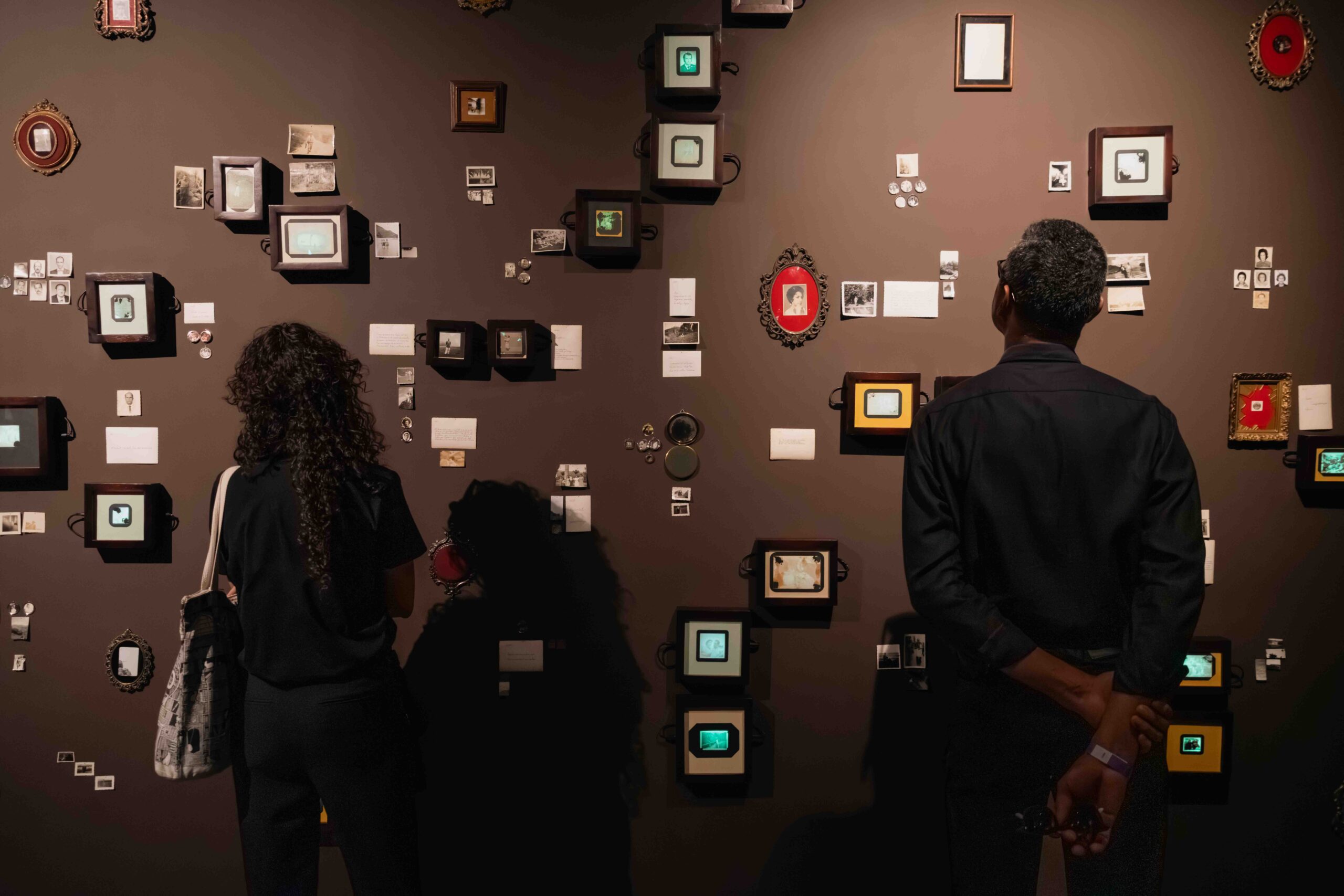
Las obras detonan relatos que invocan momentos sustanciales que sacudieron la historia de nuestros país en los que cuerpos civiles fueron sometidos a las más brutales intimidaciones simbólicas y físicas. Asimismo escenifican la fuerza que han tenido los códigos de comportamiento que aún moldean performatividades sociales útiles para el proceso civilizatorio de los cuerpos; proyecto político para el que un modelo único de familia ha resultado determinante. De otra parte, esta dramaturgia exterioriza el acontecimiento de la intimidad, incluso nos devuelve a lo perverso de la infancia.
¿Qué representa el acontecimiento de la vida cuando la muerte asecha?
¿Qué significa la ficción atroz en la que se transformó eso que acordamos como realidad?
¿Dónde se esconden la carcajada auténtica y el orgasmo alucinante?
¿Dónde persiste la conversación vivaz y sin libreto en la que alcanzamos una forma de la libertad?
¿Dónde están los que reescriben la historia?
¿Quién sigue leyendo en voz alta a quien ama?
¿Qué sentido cobra la ética en un mundo deshumanizado?
¿A dónde se fue el silencio?
¿Dónde está la poesía del murmullo en el oído?
Por más oscuro que esté allá afuera, todas las formas del afecto cuidadoso sobrevivirán. Lo que entrega un cuerpo a otro en un acto de compasión o de pasión despoja toda la maldad del mundo. Cualquier poder humano que atente contra el derecho a la vida, puede ser aplastado. Que no nos derrumbe la confusión del sinsentido. Invoquemos todos los relatos de los tiempos y la fuerza bravía de los espíritus.
*Butler, J. (2009). Marcos de guerra. Las vidas lloradas. Paidós.
Érika Martínez Cuervo
The physical gesture of staging oneself, of ‘being’ part of the event of life, is a gesture that culminates in death.
This “staging” is a recognition of (all) bodies as abstract and complex entities, as that fleshy materiality that we own but, at times, is taken from us whether as a result of violent circumstances or coercive discourses. Our bodies acquire meaning in relation to the other bodies that look at us, we are defined by them, excluded by them, praised by them, intimated by them, killed by them, desired by them, cared for by them (…) We exist because we are named by what is external to us; but what happens when we are not named by anyone? When no category has a name for us, when there is no place for a body. This exhibition plays out as the dramatization of a “thought on the act of living” and the never-ending search for meaning embodied in that act. It shows us the fierce (untamed) or introverted (turned inward) motions of those who, even in the heat of agony, remain invincible. At the same time, it reveals the destructive power of the dominant bodies that act in the manner of political beasts.
“The body is a social phenomenon: it is exposed to others, vulnerable by definition. Its persistence depends upon social conditions and institutions, which means that in order to ‘be’ in the sense of ‘persist,’ it must rely on what is outside itself.” (Butler, 2009)*
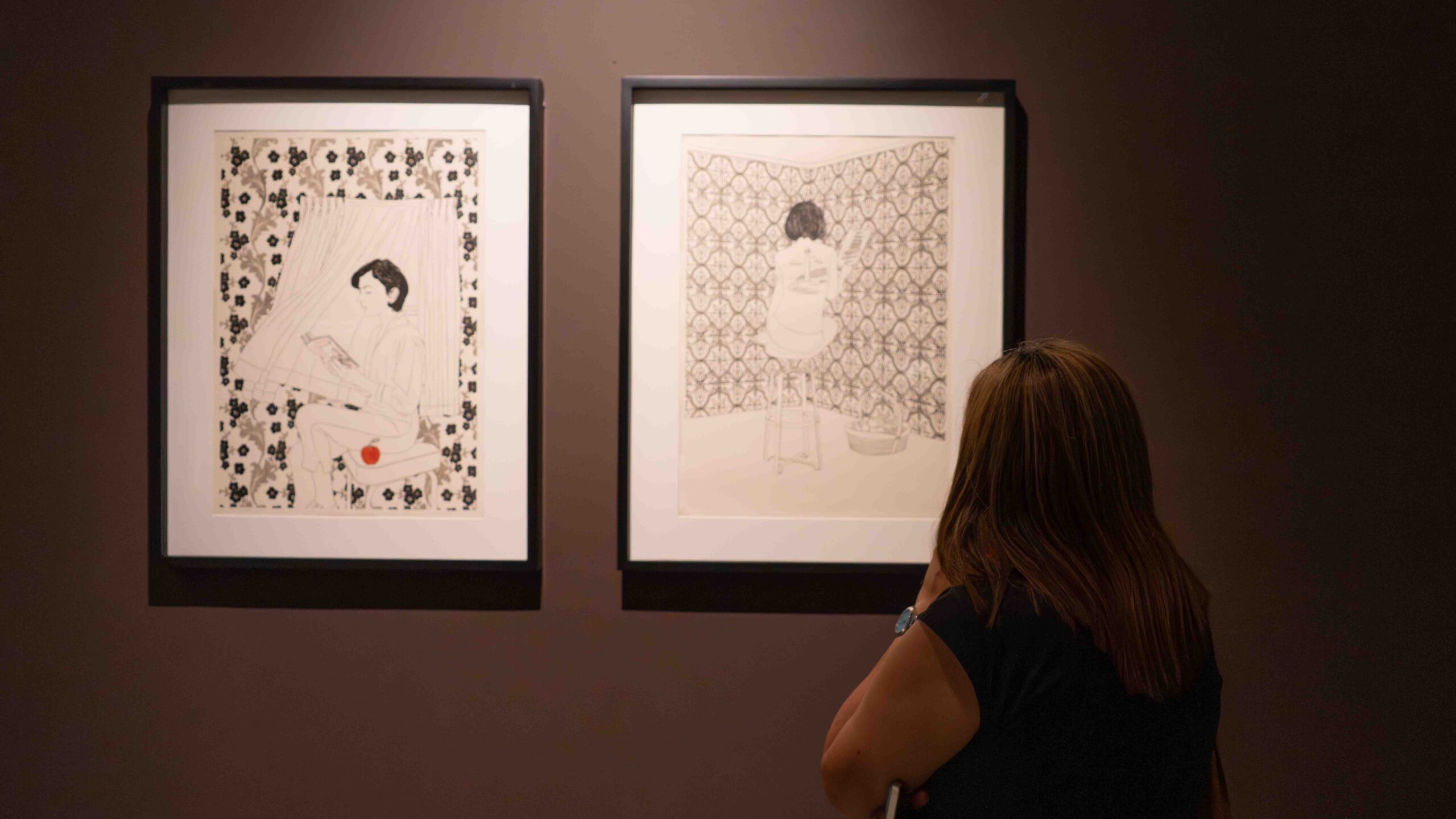
The artworks trigger narratives that evoke substantial moments that have shaken the history of our country, moments in which civilian bodies were submitted to the harshest symbolic and physical intimidation. In addition, they dramatize the power wielded by codes of behavior that continue shaping the social performances that serve the process of body civilizing, a political project that has been shaped by a unique family model. On the other hand, this dramaturgy brings intimacy to the surface and takes us back to the perverse nature of childhood.
What does the event of life represent when death threatens?
What is the meaning of the atrocious fiction in which the reality we agreed upon has been transformed?
Where is the hiding place of genuine laughter and mind-blowing orgasms?
Where does the vibrant, unscripted conversation that allows us to attain a form of freedom persist?
Where are those who rewrite history?
Who continues to read aloud for the one they love?
What is the meaning of ethics in a dehumanized world?
Where has silence gone?
Where is the poetry of the whisper in the ear?
No matter how dark things may be out there, every form of tender affection will survive. What one body offers to another as an act of compassion or passion strips away all the evil in the world. Any human power that threatens the right to life must be destroyed. Let us not be defeated by the confusion of meaninglessness. Let us call upon all the stories of the ages and the fierce strength of the spirits.
*Butler, J. (2009). Frames of War: When Is Life Grievable? Paidós.
Érika Martínez Cuervo
Four conceptual intersections operate within the exhibition as provocations aimed at opening up the montage’s proposal and its shifting nature. The connections among the works go beyond any physical proximity they may or may not have. This curatorial decision encourages a non-linear exploration that reconnects us with the fragmentary essence of time. The works on display act as “living entities” that bend and twist; they are part of a staged plot, they are pure drama: they perform, they take action, they are a pure unfolding experience.
“Linking the significance of the occurrence of a work or an action, of a story or a person, to a moment of loss (of meaning), of instability and rupture, of what transcends language, its signs and meanings, belongs solely to experience; it is meant to be understood as something alive, something that will always remain distinct from a meaning, an image, or a text (…) what can be seen is incorporated into the body, and the body is a machine of interpretation». (Fischer-Lichte, 2011) *
Daring to look at, to gaze through with one’s eyes, constitutes an act of courage.
*Fischer-Lichte, E. (2011). The Aesthetics of the Performative. Abada Editores.
I. THE WEIGHT CERTAIN BODIES BEAR UPON THIS EARTH (hells)
Whore is the daughter, whore is the mother, whore is the daughter who shelters them (collective rifts)
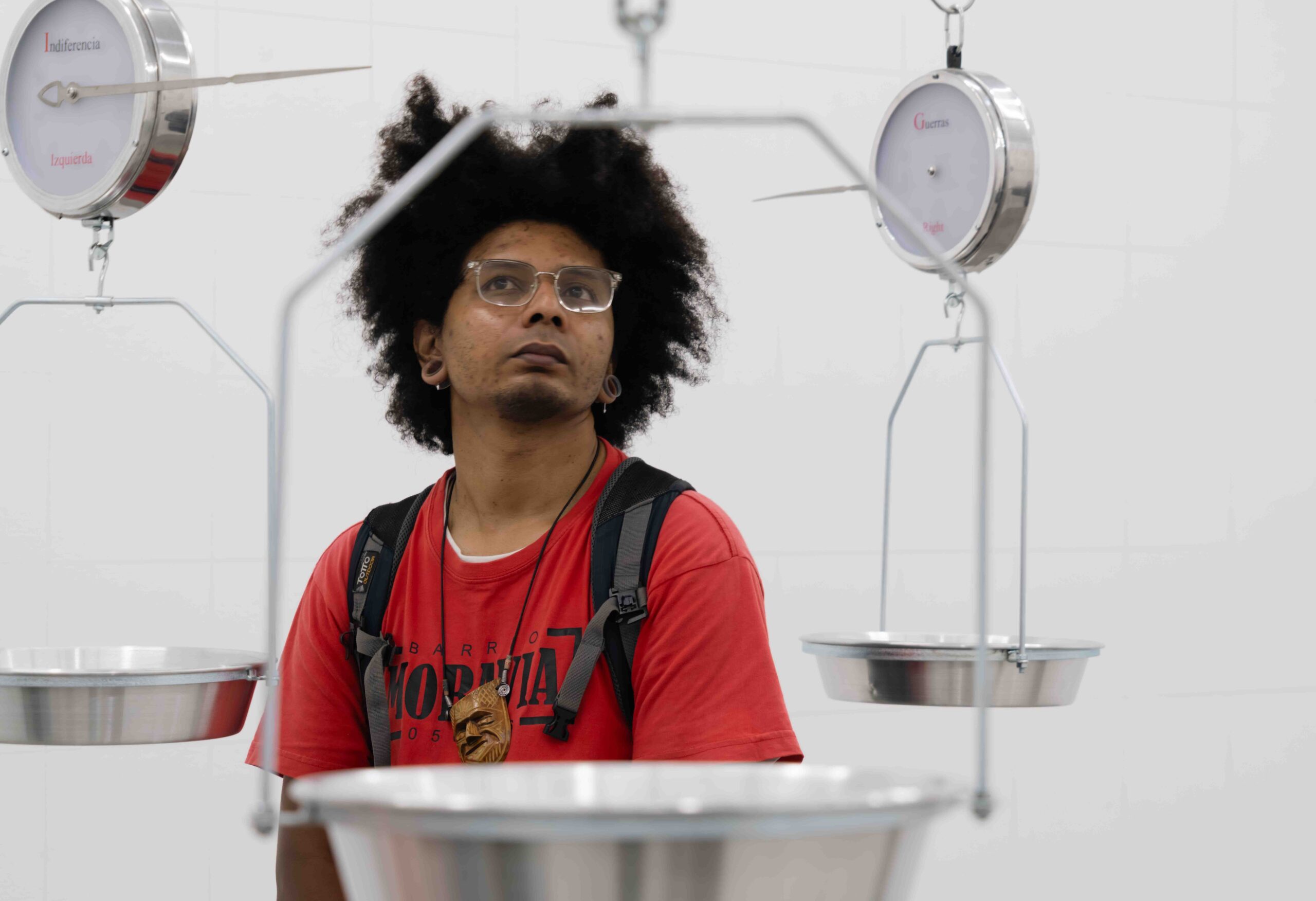
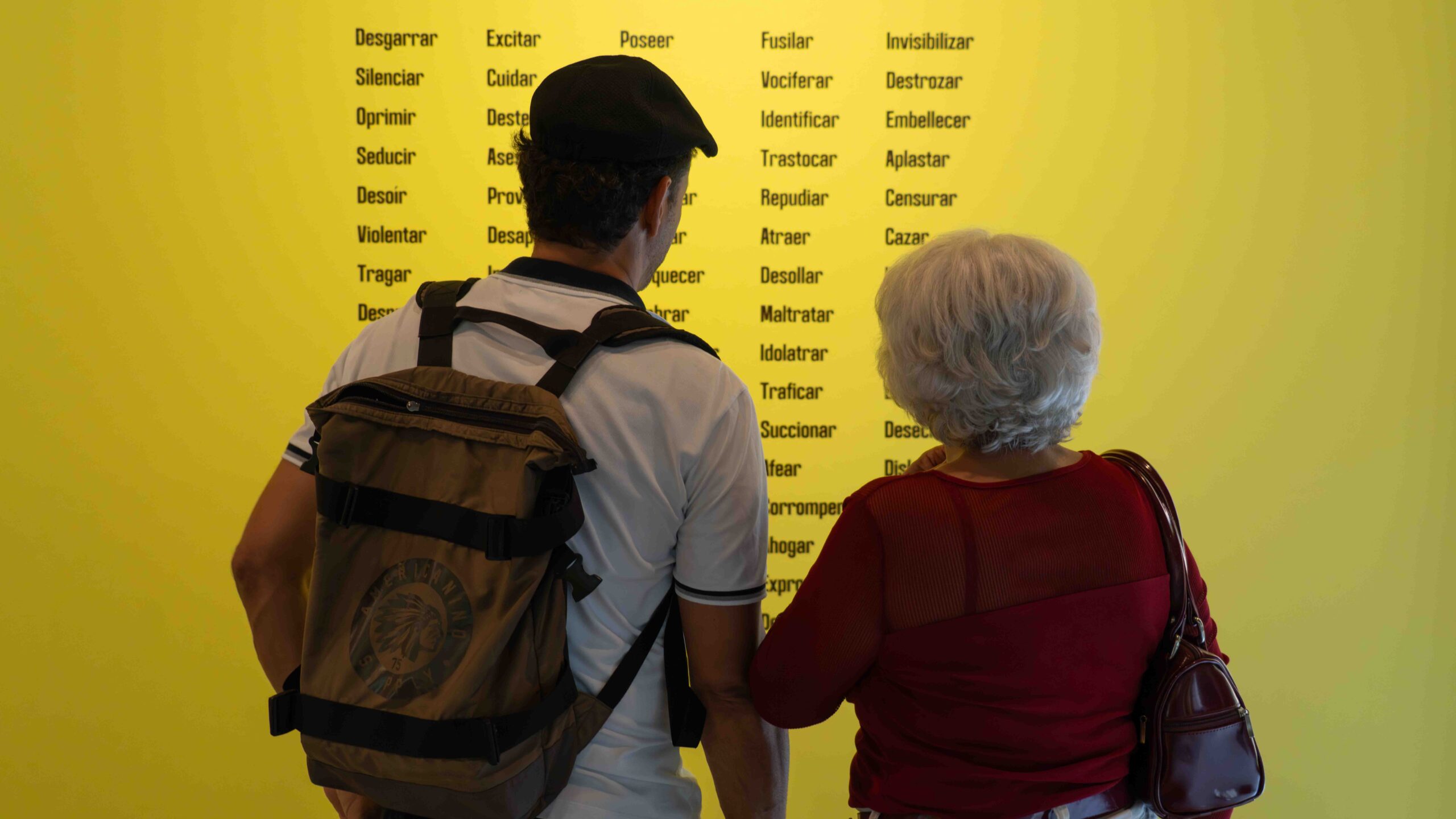
The exertion of power over the bodies (to violate, to oppress, to disappear)
II. PERFORMATIVITIES AND DISCOURSES
Dominance and normalization of the body in the social sphere (what ought to be and what resists)
Ideas of beauty (codes and artifice)
III. CHOREOGRAPHIES: SENSUALITY AND TRAGEDY (revealing oneself)
Circulations and forms of mourning (falling apart)
Voracious desires and sublime affections (unimaginable beautiful beasts)
IV. BEAUTIFUL, ATROCIOUS INTIMACIES (the unfolded self)
One’s own image, secret emotions (introspections)
Fantasy, playfulness, magic, fictions, rituals.
North Wing
In this temporality, which we hesitantly call the present, we have fallen into a state of overwhelming strangeness; our bodies are the ones that feel the strain, and they are the ones that reveal the uncertainty of existing and witnessing the space and time that we are inevitably bound to. Our bodies inhabit this world, and that is no small matter: “being here” and “being alive” is a challenge and, paradoxically, a condition that we cannot escape.
Bodies have been history’s most potent vehicle of meaning; all of the atrocities perpetrated by those in power have been engraved on the skin and in spirits of those who have been more defiant; and the subjugated, dependent, categorized, oppressed bodies have invariably resisted. All it takes is a scream or a moan, or even a sublime silence: submission is never absolute.
Érika Martínez Cuervo
South Wing
De-theorize the bodies! Not as an invitation to invalidate theory, but as a way to discern the experiences of these bodies through a language that is closer to us, one that is able to tell us about their contradictions and feelings (all of them) and enable us to build a powerful collective bond rooted in the fundamental act of looking at one another in the eye. Are we willing to embrace a form of slow-paced life solely to address the challenges and joys that our bodies experience? Theory, that elaborate thought has its origin in life itself; let us not forget that.
How little we know about what goes on inside other people’s bodies, even those we believe are closer to us. We know their physical scars by heart, but we cannot even suspect what their inner selves conceal. We are exiles. We watch their routines with rapt attention; we know their quirks; and yet, we know nothing. And that unawareness unsettles us. That strangeness! It is one thing to look at the body as a whole but it is quite another to look at it in detail, to gaze into it, to touch it with our own eyes, to see its smallest details, to lick its fluids, to smell its scents, to break it down, to ask it not to pose, to ask it to open up, to let itself be seen.
Érika Martínez Cuervo.